
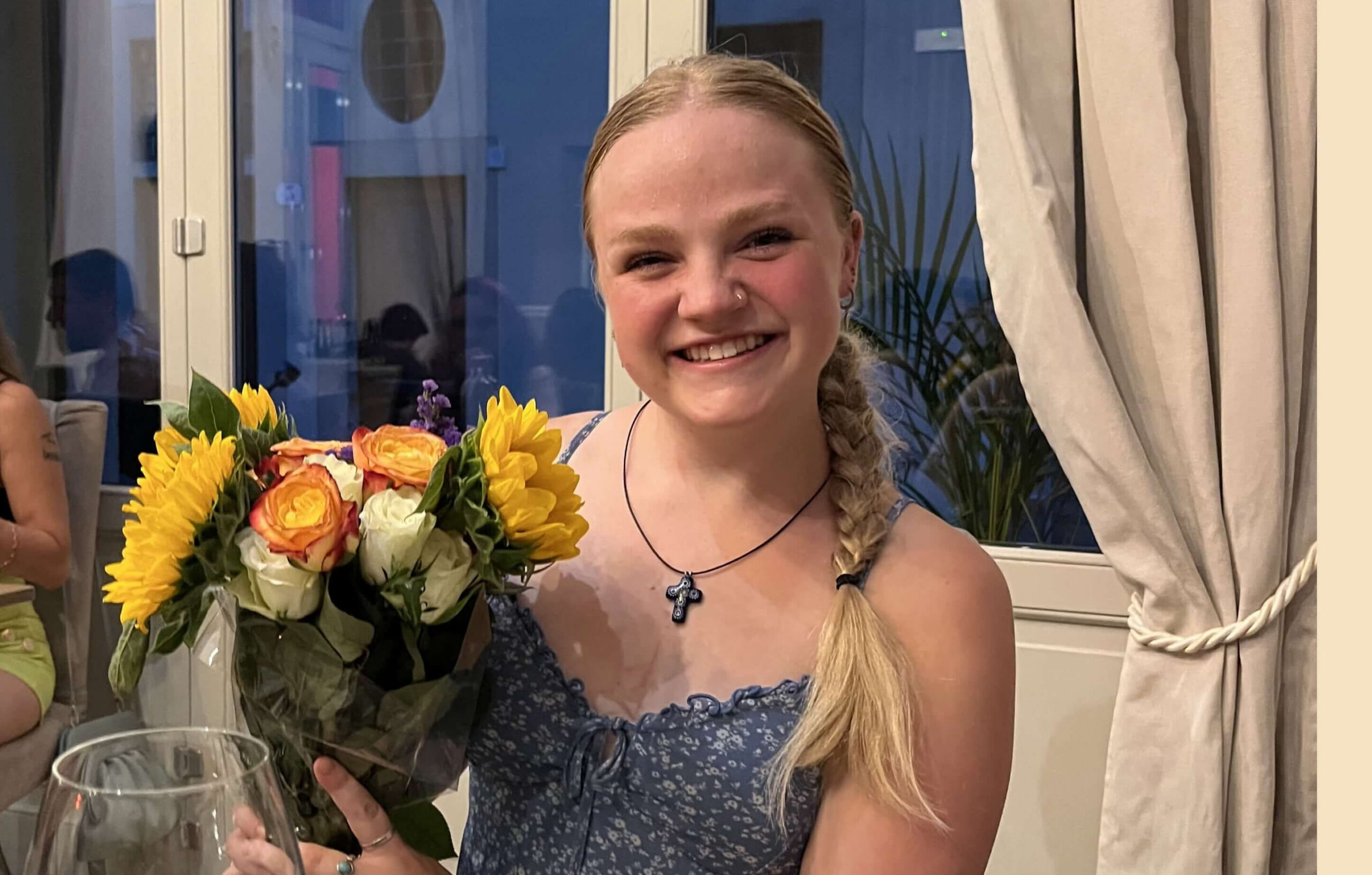
For years, Ciara knew she wanted to run the Falmouth Road Race. She also knew she wanted the race to stand for something.
Mental health has long been one of the causes closest to her heart. Years ago, while she was still in high school, Ciara was introduced to suicide prevention education through a classroom presentation. The message stayed with her, and over time her interest in mental health advocacy only grew stronger. So when the opportunity finally came to run Falmouth and choose a charity team, the decision felt easy.
“I knew it was going to be mental health-related,” she says. “Once I saw The Samaritans as a charity team, I knew it was the team for me.”
Her connection to the cause goes far beyond a single presentation. For part of her career, Ciara worked in children’s inpatient psychiatry, supporting young people during some of the most difficult moments of their lives. The experience changed her. Every day, she met children carrying burdens far heavier than most adults could imagine. Some recovered. Some found hope. Some did not.
One young girl, in particular, remains with her. When training gets difficult, when the miles feel long, or when the temptation to stop creeps in, Ciara thinks about that child.
“I don’t stop,” she says. “Because I’m not running for me.”
She is running for the young lives cut short by mental illness. For the people who never got the chance to see the better days that might have been waiting for them. For those who believed their pain would never end.
In many ways, she is running for herself, too.
Ciara has struggled with her own mental health for as long as she can remember. Looking at her life now, she says that earlier versions of herself would never have believed she would end up where she is today. That’s one of the lessons she carries with her every day: life can change unexpectedly, and sometimes it changes for the better.
That perspective shapes every mile she runs. Compared to the challenges she’s witnessed and the battles she’s fought herself, the difficulty of a road race feels manageable. The finish line becomes a reminder that things that once felt impossible can, in fact, be done.
Throughout her fundraising journey, she discovered something else: almost everyone has a story. Conversations that began with a simple explanation of why she was fundraising often turned into deeply personal discussions about mental health, loss, resilience, and grief. People shared their own experiences. They remembered loved ones. They opened up about struggles they had never discussed publicly before.
One moment that stands out is watching people who had spent years projecting “toughness” suddenly allow themselves to be vulnerable.
“There is a particularly harmful stigma when it comes to men’s mental health,” she says.
She watched lifelong friends share stories they had never told before. She saw tears in the eyes of people who rarely showed emotion. In those moments, titles and identities seemed to disappear. The room was no longer divided into parents, first responders, teachers, friends, or coworkers. It was simply a group of human beings recognizing themselves in one another. That, for Ciara, is why these conversations matter so much in the first place.
Again and again, people told her they were supporting her fundraising efforts because they were remembering someone they had lost to suicide. While those stories were painful, they also revealed something beautiful: the way love endures. Despite the lies depression often tells people—that they don’t matter, that nobody would miss them—the stories she heard were proof of the opposite. People were still carrying love for those they had lost years later. They were still remembering, grieving, and honoring them.
As race day approaches, Ciara is carrying all of those stories with her.
She is carrying the memories of children she worked with. She is carrying the memories of people lost to suicide. She is carrying the conversations that have unfolded during this journey and the people who trusted her enough to share them. She is also carrying gratitude.
There was a period in her life when serious health challenges left her unable to walk. Looking back, she recognizes how easy it can be to take simple things for granted.
“I’ve gotten sick of having things stop me from living,” she says.
Today, running Falmouth represents something more than completing a race. It is a celebration of being alive, a reminder not to waste the opportunities she has been given, and a chance to honor every version of herself that never thought she would make it this far.
When she thinks about what she hopes her participation will accomplish, her answer is simple: she wants people to feel less afraid of the conversations we’ve been taught not to have. She wants people who are struggling to feel less alone. She wants people to ask for help when they need it. Most of all, she hopes someone who is hurting chooses to stay one more day because they realized there are people willing to listen.
And if there’s one message she hopes people take away from her story, it’s this: show up for the people you love. Keep checking in. Keep inviting them. Keep listening. Keep reminding them who they are, even when they can’t see it themselves.
Sometimes support looks like a long conversation. Sometimes it looks like sharing a song, suggesting a movie, or showing up with an ice cream cake for no reason at all. You never know what small act of kindness might change the course of someone’s life.
“Kindness saves,” Ciara says. For her, that’s not just a slogan. It’s something she’s witnessed firsthand. It’s the reason she’s running. And it’s the hope she’ll carry with her all the way to the finish line.
Support Ciara’s fundraising journey on her Race Roster page.